Setting the Soil Health and Fertilizer Scene
The closure of the Strait of Hormuz following
the outbreak of conflict in the Middle East in February 2026 has triggered a major supply shock, severely
disrupting global energy and fertilizer trade. The resulting spikes in oil,
gas, and fertilizer prices have particularly severe implications for sub-Saharan
Africa, where many countries depend heavily on imported fertilizers.
Higher prices and supply constraints threaten
to further limit fertilizer use in a region where application rates are already
among the lowest in the world, with potentially significant consequences for
agricultural productivity, soil nutrient depletion, and food security.
Despite some
progress, fertiliser use in Africa remains among the lowest in the world.
According to the African Union (2024), average application rates are
estimated at around 18 kg of nutrients per hectare, far below the 50 kg/ha
target set by the 2006 Abuja Declaration, which more than 40 African
countries have yet to meet.
The 2024 Nairobi Declaration on Fertilizer
and Soil Health seeks to address these challenges by improving access to fertilisers
and promoting integrated soil fertility management, including a commitment to
triple domestic production and distribution of organic and inorganic
fertilisers by 2034.
Many farmers across sub-Saharan Africa face high fertiliser costs,
inadequate transport infrastructure and limited market access. These
longstanding challenges are compounded by the region’s heavy dependence on
imported fertilisers, leaving farmers particularly vulnerable to global supply
disruptions and price fluctuations. Moreover, fertiliser production is
concentrated in a few countries, while most countries in the region depend on
imports to meet their needs.
From Scientific Evidence to Policy Action
SASI-SPi objective is to bridge the gap between
scientific research and policymaking, ensuring that policy decisions and investments
are informed by the best available evidence and respond to the needs and
priorities of EU partner countries.
This process brings together researchers, technical experts,
and policymakers to identify key challenges, assess available evidence, explore
possible policy responses and translate findings into actionable
recommendations. Through consultations and exchanges, scientific analysis is
confronted with policy priorities, practical constraints and stakeholders’
perspectives. This dialogue helps identify feasible solutions, assess their
potential implications and inform policy and investment decisions.
The
Soil
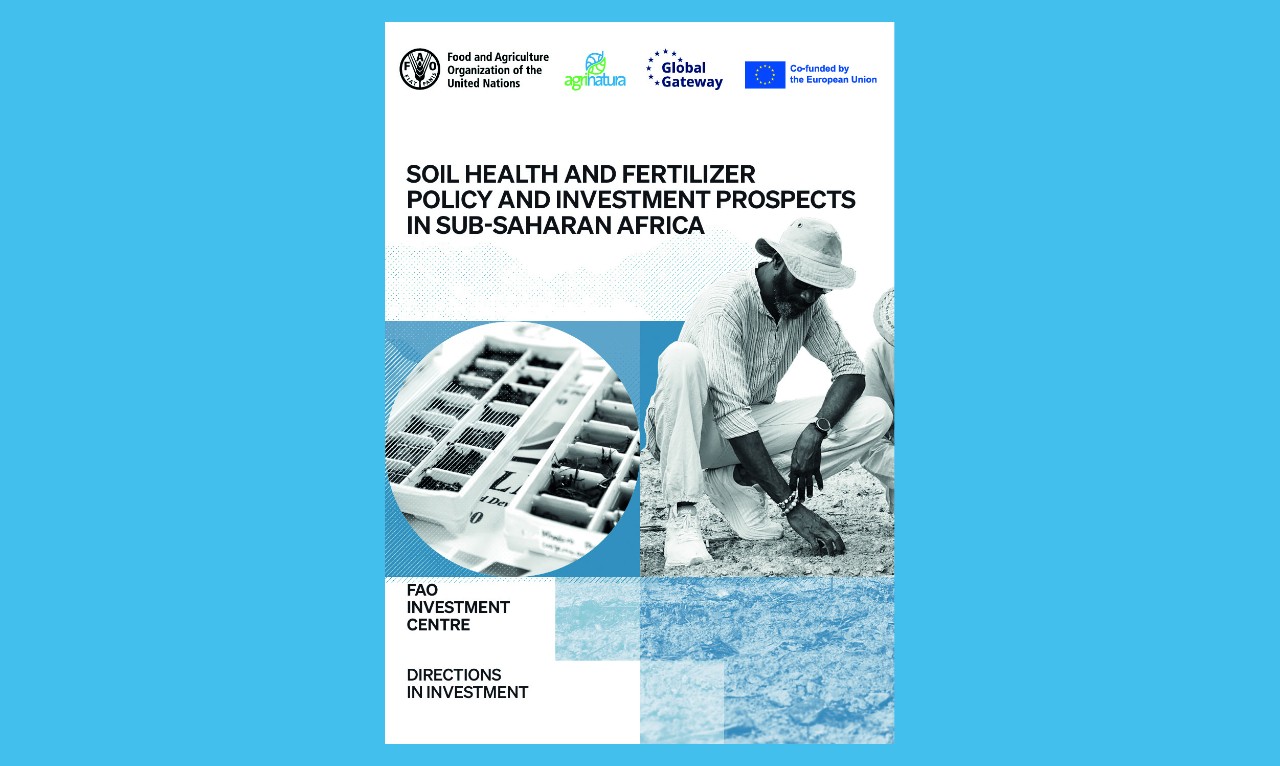
Health and Fertiliser Policy and investment prospects in subsaharan Africa is a joint technical brief resulting
from a SASI collaborative science-policy dialogue involving the European Union
(EU), the African Union (AU), the Food and Agriculture Organization (FAO), and
Agrinatura. It contributes to ongoing efforts to improve fertilizer access,
restore soil health, and strengthen the resilience of African agricultural
systems and builds on the commitments made at the 2024 Africa Fertilizer and
Soil Health Summit in Nairobi and subsequent discussions on their
implementation, including those held at the 2025 Africa Food Systems Forum in
Dakar.
Key events:
•2006 Abuja
Declaration: Focused on increasing mineral fertilizer use to 50 kg/ha by
2015.
•2014 Malabo
Declaration: Reaffirmed commitments to agricultural productivity and called
for “smart subsidies.”
•2024 Nairobi
Declaration (Africa Fertilizer and Soil Health Summit): its Action Plan
(2024–2034) prioritizes Integrated Soil Fertility Management and sustainable
soil and water management.
•2025 Kampala CAADP
Declaration: Embedded soil health and Integrated Soil Fertility Management
into the Comprehensive Africa Agriculture Development Programme
(CAADP)
agenda
for 2026–2035, reaffirming investment in soil fertility as a cornerstone of
sustainable transformation.
Key messages from the Soil Health and Fertilizer brief
The
technical brief was released in June 2026. It provides a roadmap for both
immediate crisis response and long-term transformation, making it highly
relevant for policymakers, practitioners, and investors today. It highlights
the need for:
Policy making: Four priority areas are identified:
(1) improving soil health and fertility, (2) increasing fertilizer availability
(including local production), (3) improving access and affordability, and (4)
strengthening producer incentives.
Investment
in Infrastructure and Knowledge: Calls for investment in rural infrastructure, soil testing, extension
services, and research and development.
Regulatory
and Institutional Reform: Stresses the importance of enabling environments, quality assurance,
and public-private partnerships.